See inside the model
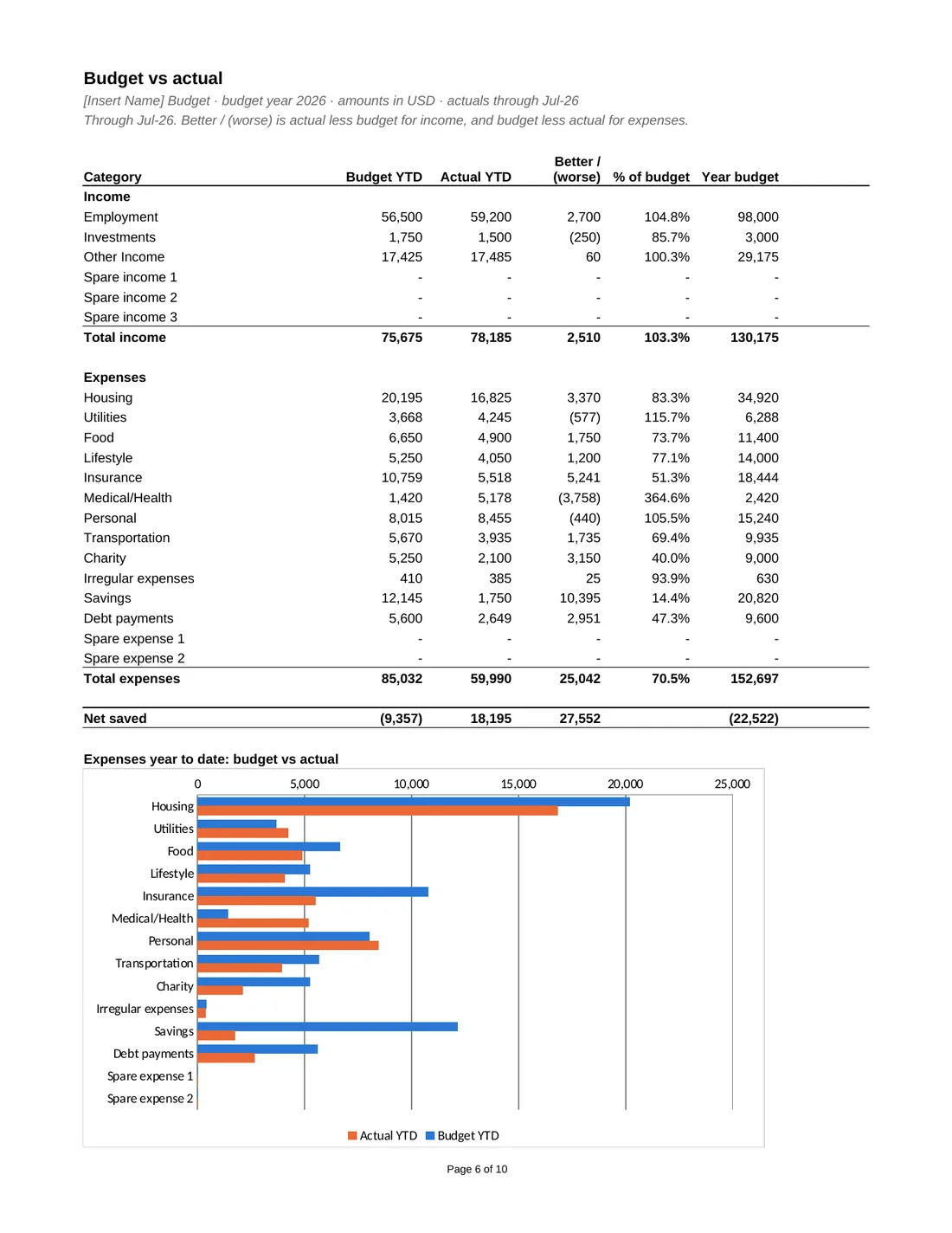
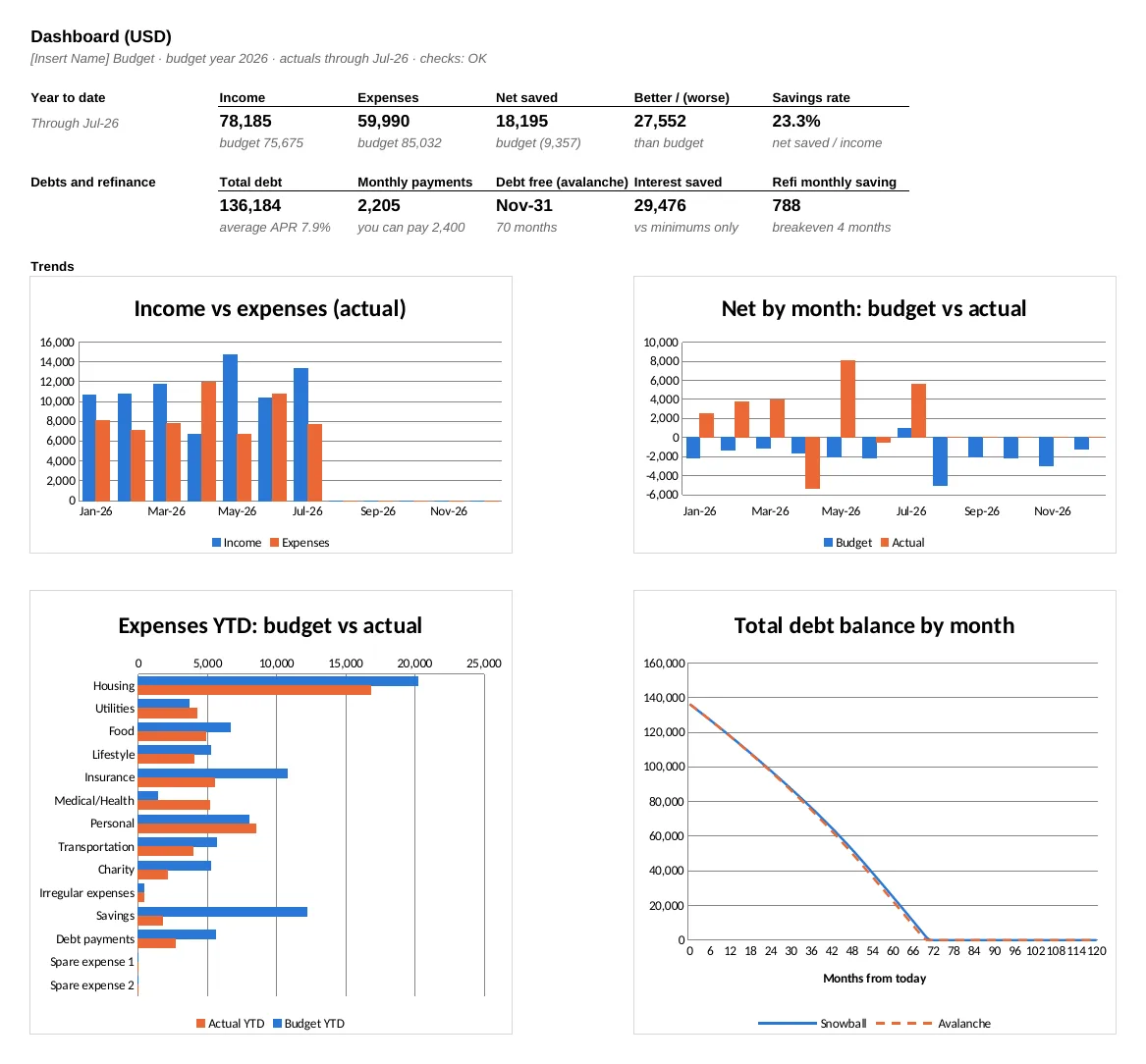
Year-to-date income, expenses, net saved and savings rate, your debt figures and four charts. Full size ↗
“Confession: this is my favorite model. I built it for myself 8 years ago and I still use it every month. It’s detailed yet easy to use, keeps my spending organized and keeps me honest about saving. I call it the ultimate personal budget.”
Patrick Quigley
The Personal Budget is an Excel and Google Sheets template that tracks your budget against what you actually spend, plans your debt payoff and tests a refinance. Patrick Quigley, who built it, came in under budget in 81 of 96 months using it.
Where does my money go, when will I be debt free, and should I refinance?
“Confession: this is my favorite model. I built it for myself 8 years ago and I still use it every month. It’s detailed yet easy to use, keeps my spending organized and keeps me honest about saving. I call it the ultimate personal budget.”
Patrick Quigley
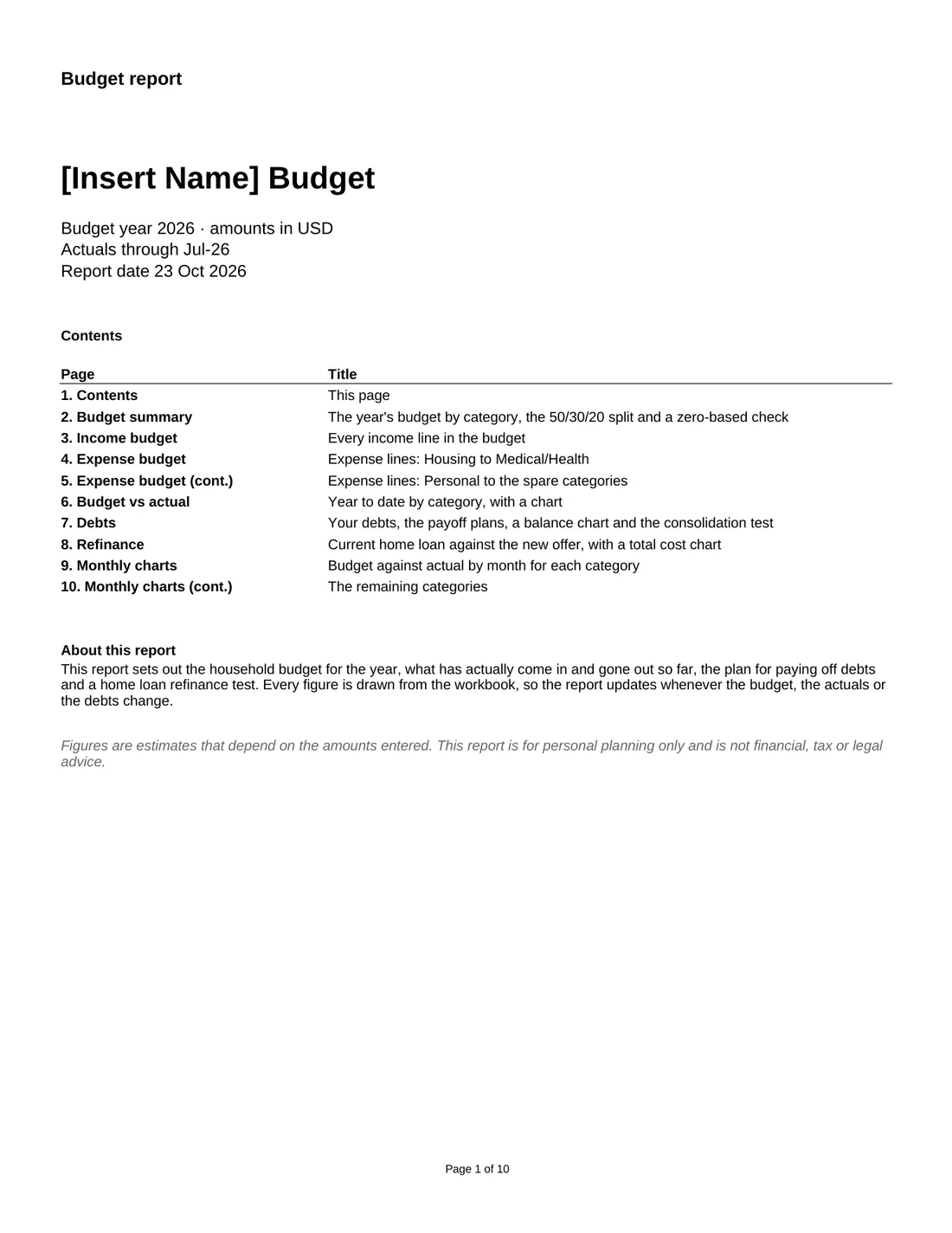
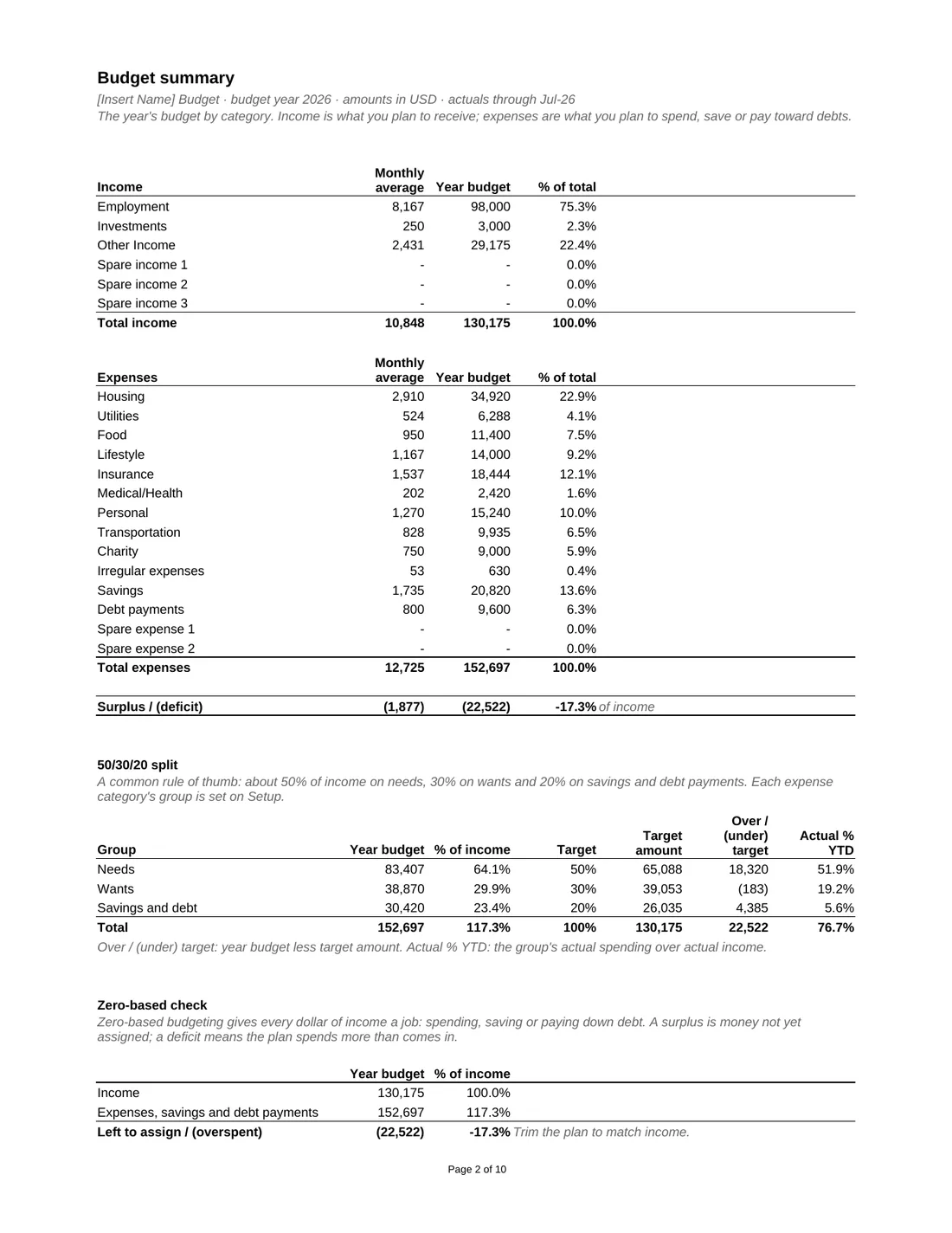
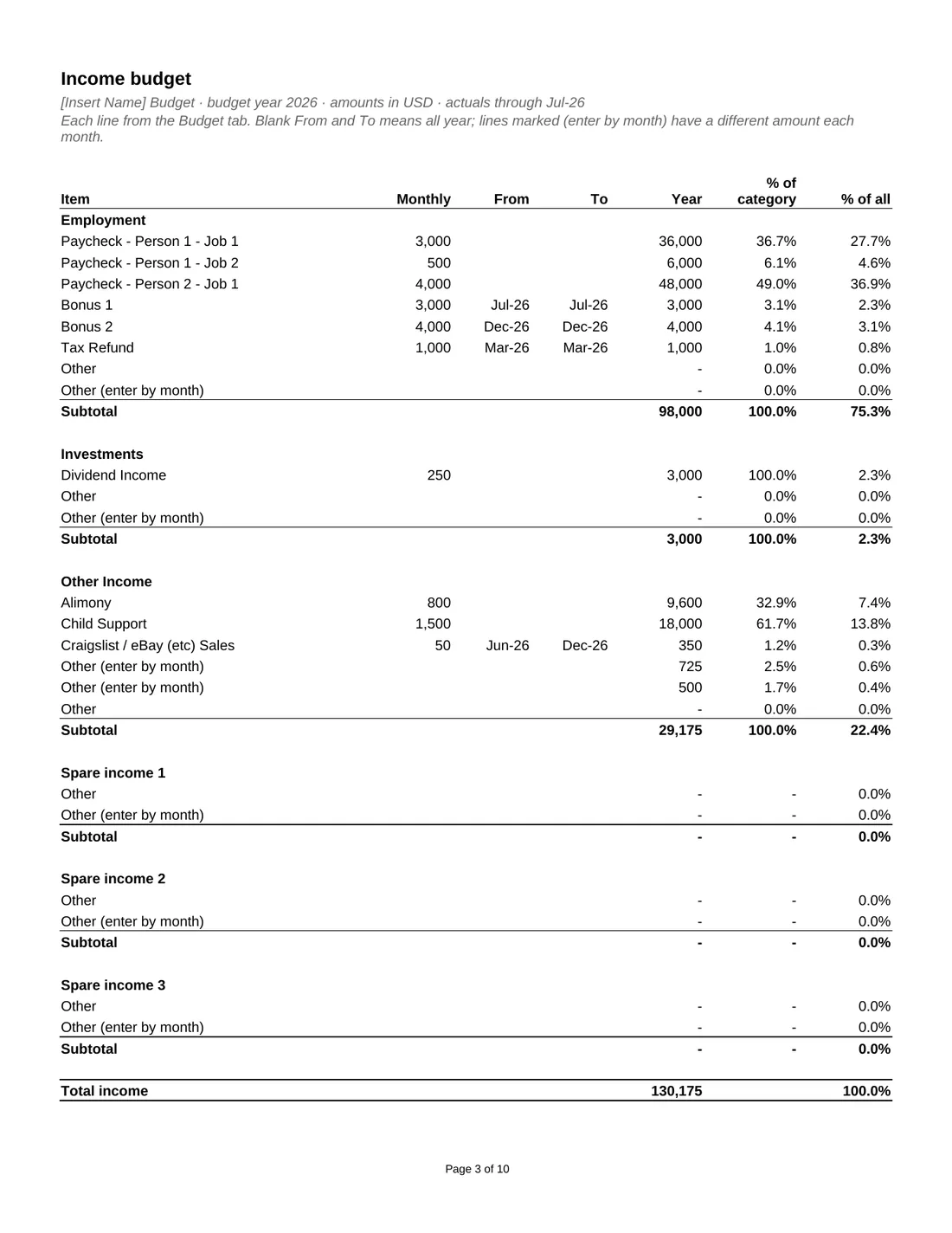
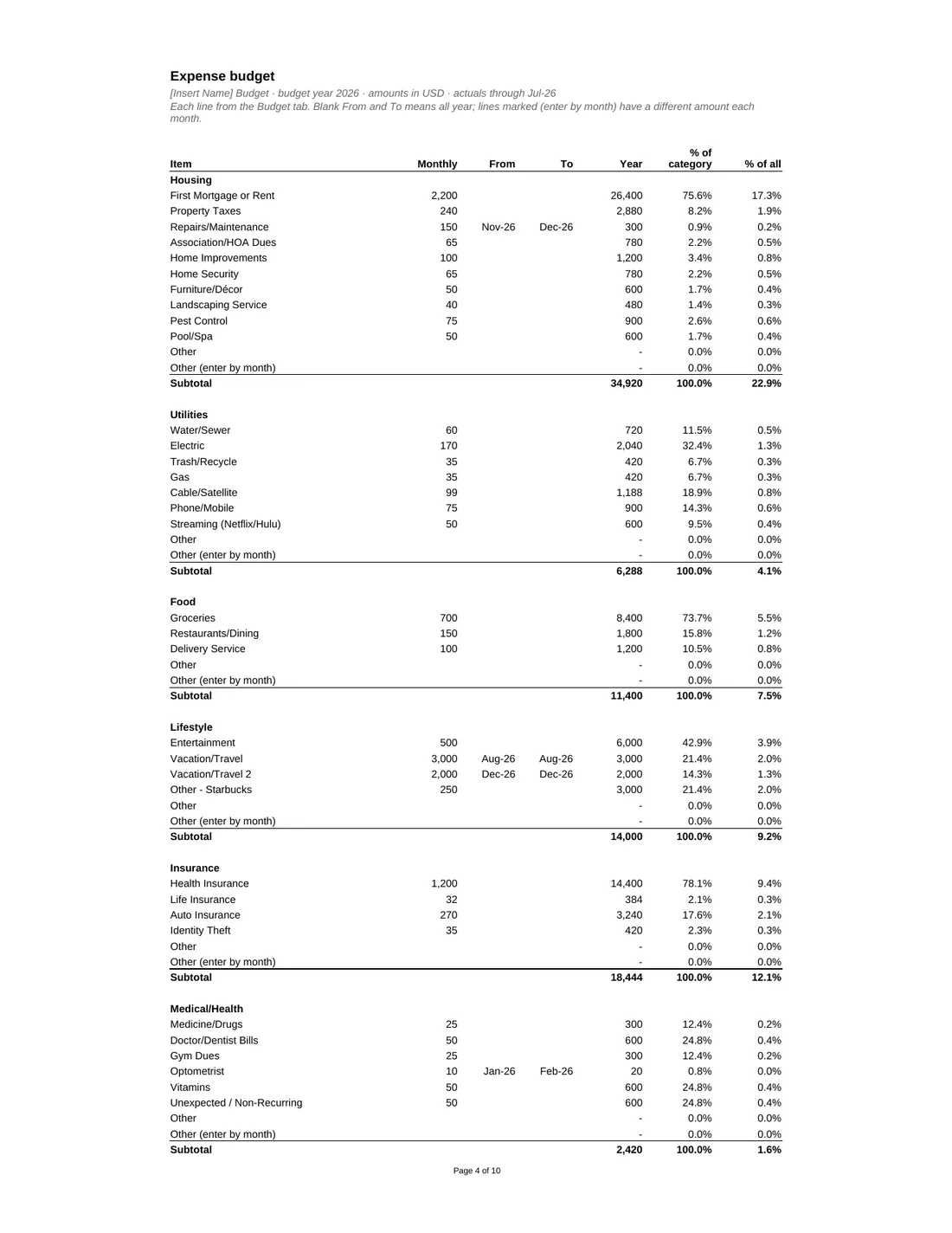
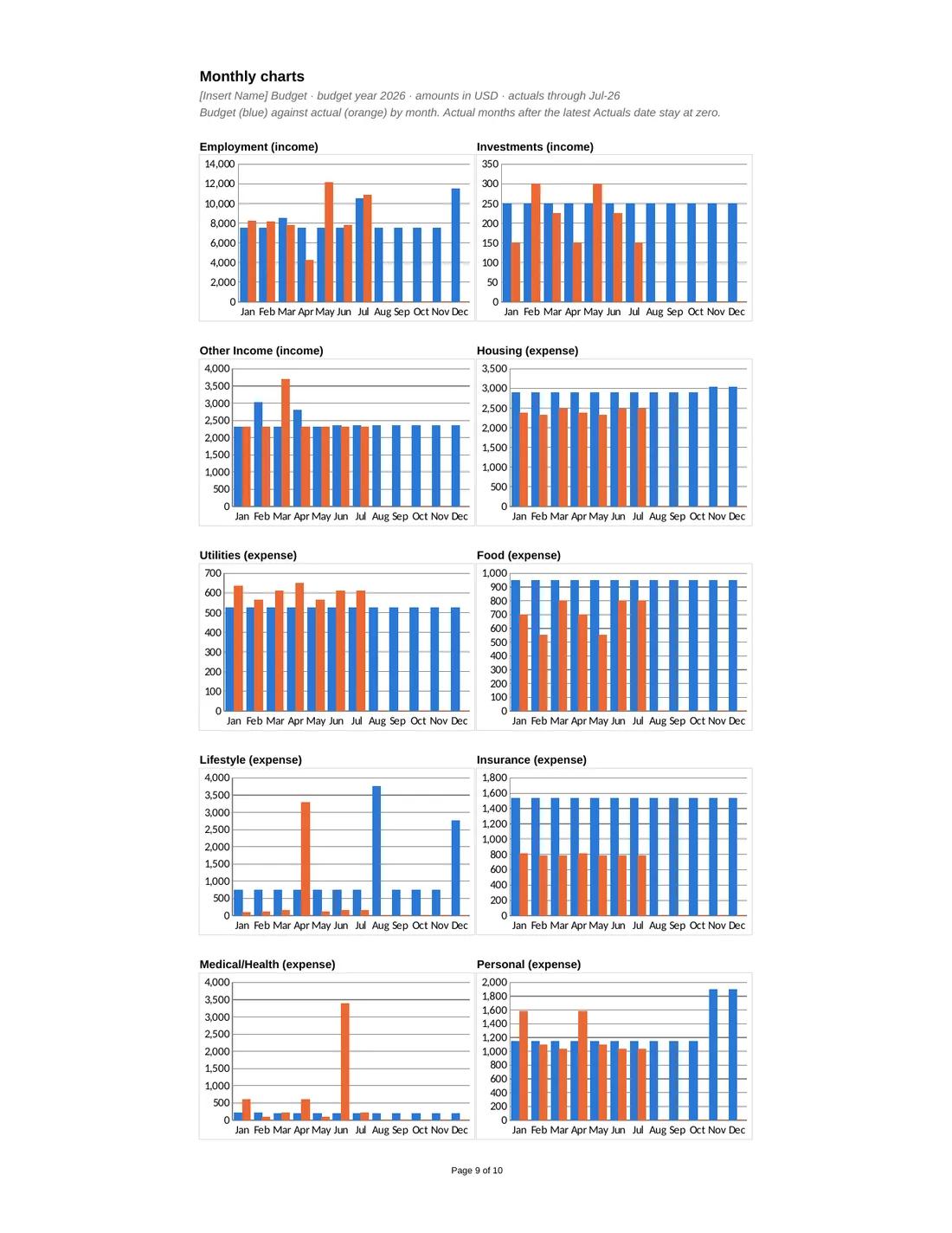
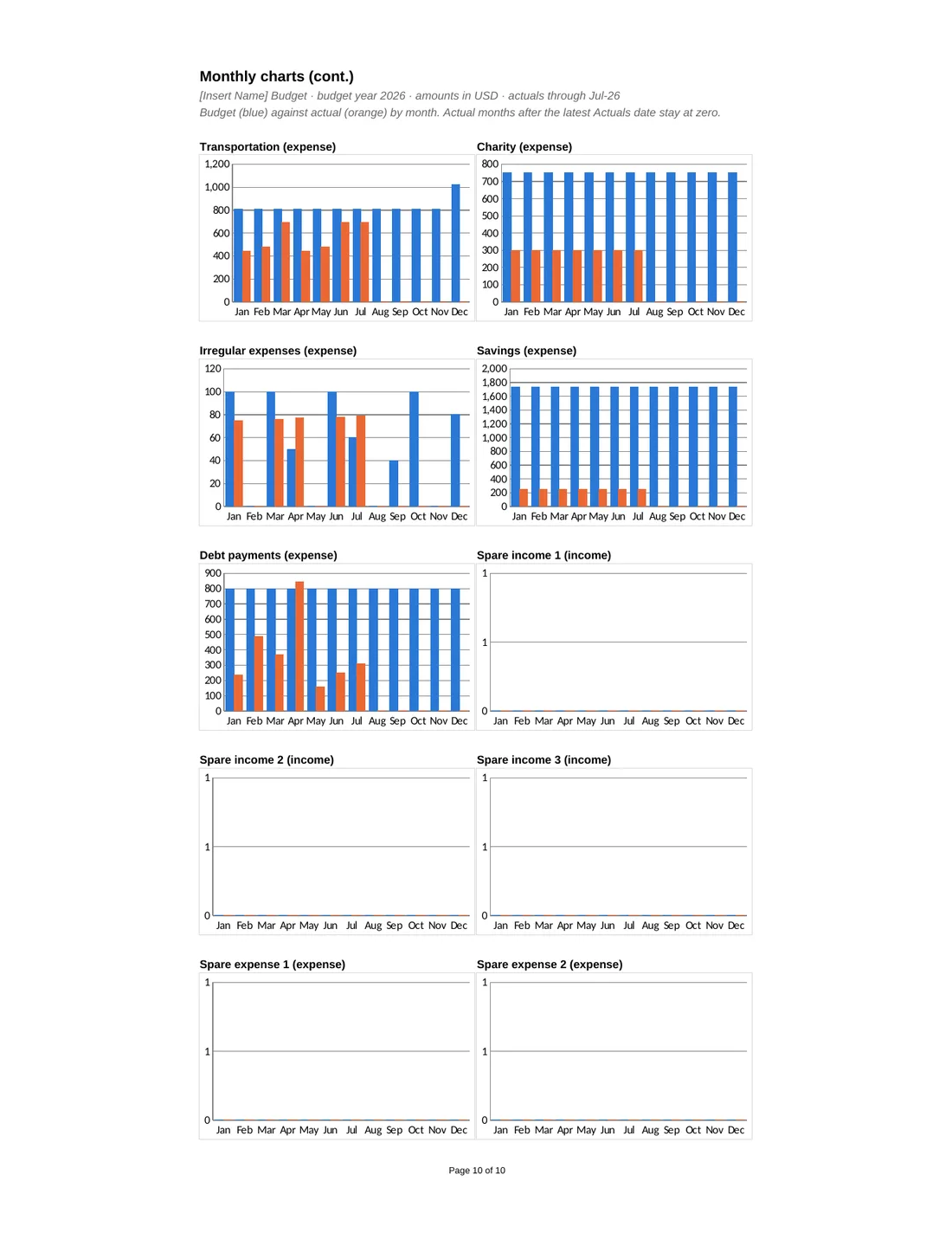
Print-ready report
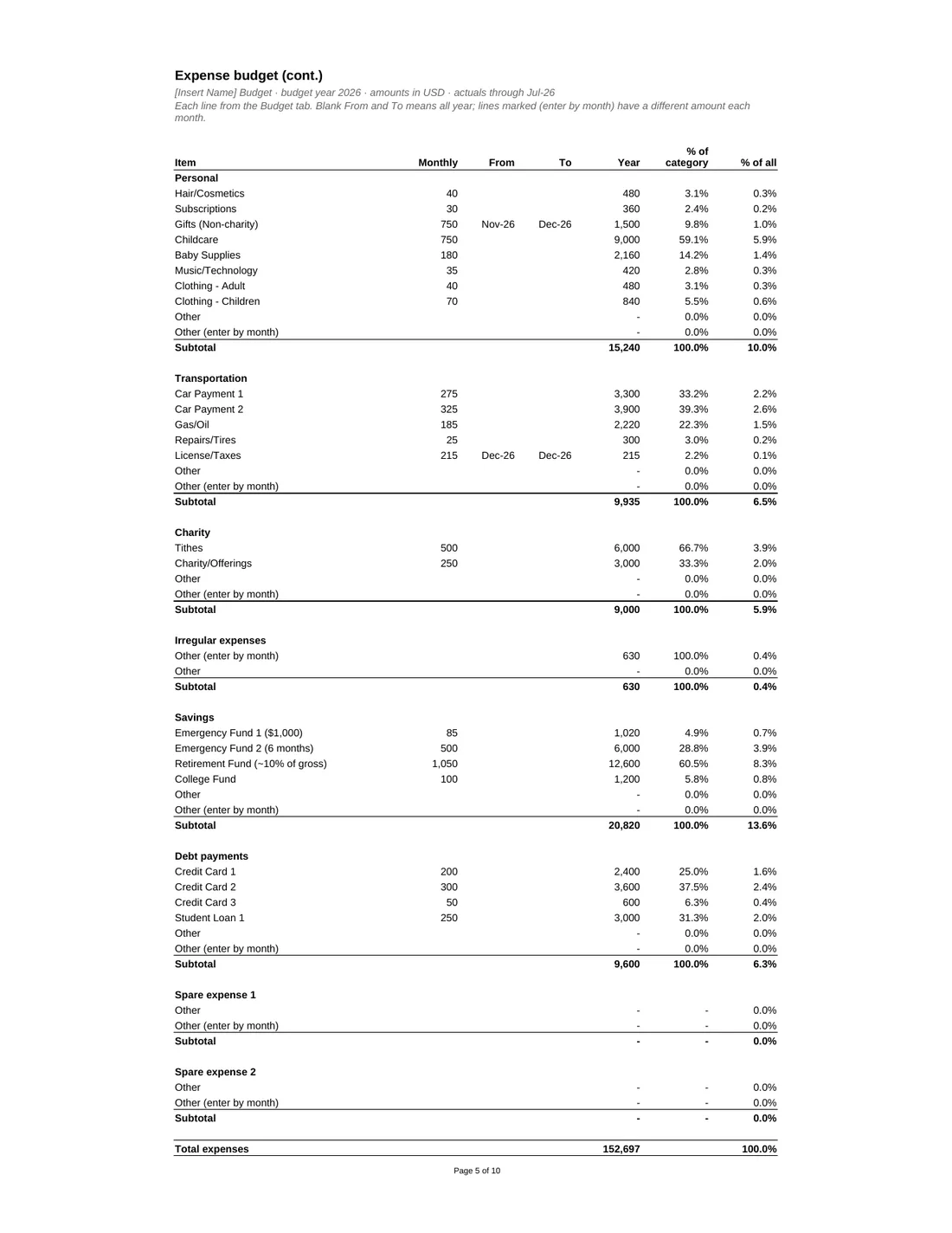
The workbook includes 10 report pages that fill themselves from your numbers: a budget summary with a 50/30/20 split, every budget line, budget against actual, your debt payoff plan and the refinance test. Print them or save them as one PDF to share with a partner or adviser.
Model highlights
This isn’t just a budget spreadsheet. It’s a personal financial planning tool that connects your everyday spending, savings, debt payoff and mortgage refinancing in one workbook for Excel or Google Sheets. Plan each month by category, enter what you actually earn and spend, and the Dashboard shows where you stand, when you’ll be debt free and whether a refinance is worth it.
What's included
One workbook with four tools: a budget tracker, a dashboard, a debt payoff planner and a refinance calculator. $29, one-time purchase, with blank and sample-data copies and a Google Sheets version.
Reviews
“Patrick nails it with his personal budget tracker. It’s easy to use and more complete than any other I’ve seen on the internet. I’m a happy customer.”
“I’ve tried several ways to manage our household budget, but this Excel model brings everything together in one place. It’s helped us keep track of spending, plan ahead, and get a better picture of where our money is going.”
“What I like most is being able to see the different debt payoff options side by side. Instead of guessing, I can see how different payment strategies affect my timeline and interest costs. It’s a practical tool that helps make the plan feel manageable.”
“This calculator is a hit for me. It breaks down costs perfectly, allowing you to see the installment, fees, and additional charges all in one place. It’s the perfect tool.”
“To the point – detailed, but not overly complicated. It’s great that you can fully customize categories and monitor your budget on the fly. A big plus is the clear and simple formulas.”
“Finally, a decent year-round view! I have everything at a glance – I can see overspending and stick to my savings plan more easily.”
Bought this model? Share your review →
Debt tracking
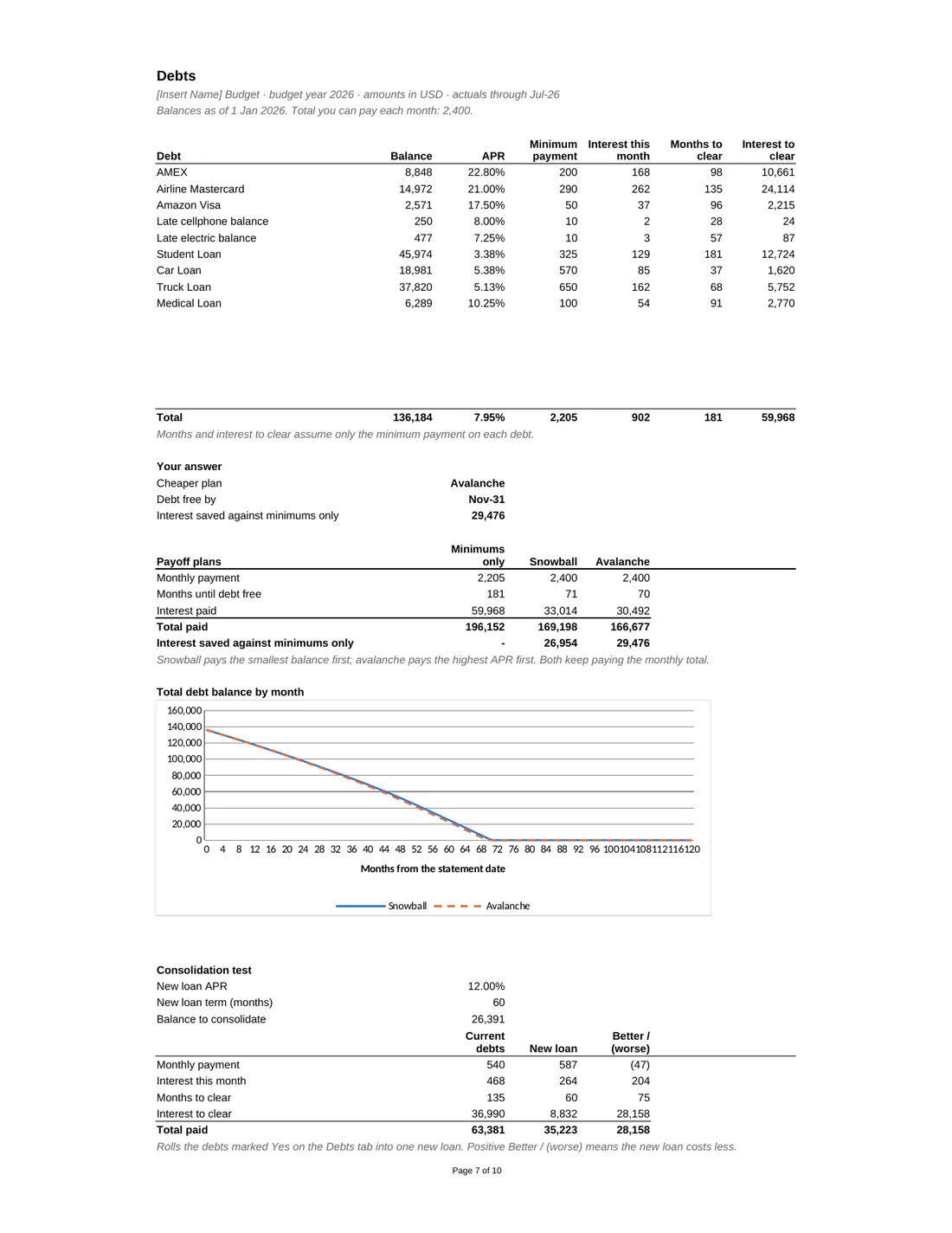
Avalanche, which pays the highest rate first, usually costs the least. Snowball, which pays the smallest balance first, gives quicker wins. In the sample data, avalanche saves $29,476 in interest against paying minimums only.
List each debt with what you owe, its rate and minimum payment, then enter what you can pay toward debts each month. The workbook runs three plans side by side: minimums only, snowball and avalanche.
A box at the top gives the answer: the cheaper plan, your debt-free month and the interest saved. You can also test rolling chosen debts into one consolidation loan.
Snowball: smallest balance first
Avalanche: highest rate first
Sample data: 9 debts
Figures from the sample data copy. Your results depend on your own balances, rates and payments.
Refi calculator
It is worth it when the monthly saving wins back your closing costs well before you plan to sell or pay off the loan. The calculator shows that break-even month.
Enter your current loan from your statement and the new offer from the lender's Loan Estimate: rate, length, closing costs, points, and whether the fees go on the loan.
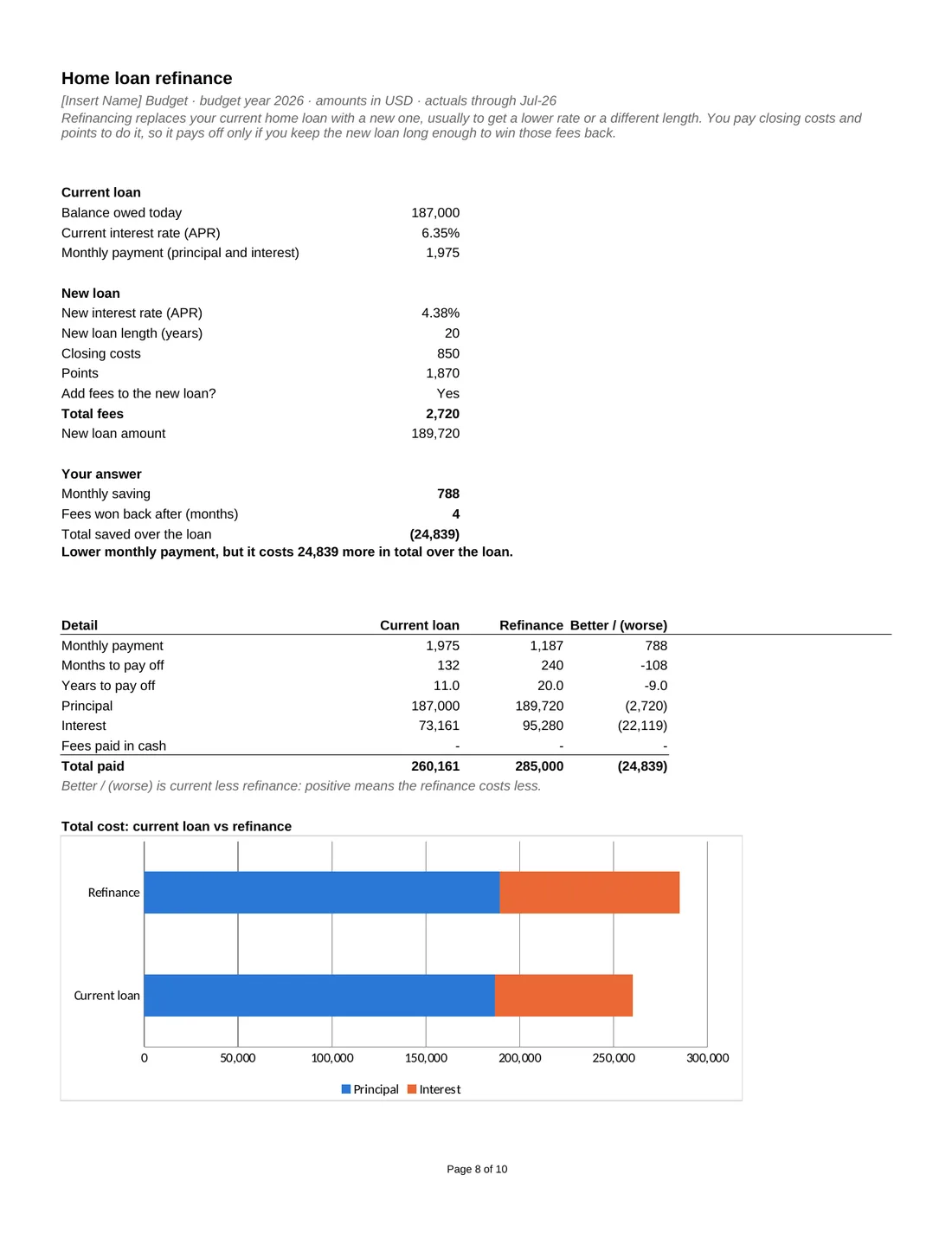
You see the monthly saving, how many months it takes to win back the fees and the total cost of each loan, with a chart.
A lower payment is not always a better deal. A new 20 or 30 year loan can cost more in total, and the calculator says so plainly.
Months to win back fees = Total fees ÷ Monthly saving
Sample data
The current loan has 11 years left and the new one runs 20, so the lower payment costs more overall.
List your monthly income, then your expenses by category, and compare each month’s plan with what you actually spent. In this workbook you type into the yellow cells and the dashboard, totals and charts update on their own.
A spreadsheet costs once, keeps your data on your own computer and lets you change anything. An app links to your bank but usually charges every month. I’ve used this spreadsheet every month for 8 years.
Avalanche, highest rate first, costs the least interest. Snowball, smallest balance first, gives quicker wins. In the sample, avalanche saves $29,476 and snowball $26,954 against paying minimums only.
Divide your closing costs by the monthly saving to get your break-even month. If you’ll keep the loan well past that, the refi usually pays. The calculator also shows the total cost of both loans.
Two Excel (.xlsx) files: one filled with sample data so you can see how everything works, and a blank copy ready for your own numbers. You also get a PDF with two buttons that make your own Google Sheets copies of both, saved in your Google Drive. Everything downloads right after purchase, and the instructions are on the Cover tab.
Yes. Your purchase includes a Google Sheets version of both files. Click a button in the included PDF, sign in with any Google account and Google makes your own private copy. No Google account? You can create one free at accounts.google.com/signup in a couple of minutes; it doesn't need to be Gmail. The report pages print one tab at a time in Google Sheets.
Yes. We can add categories, tabs or reports for your household or small business. Email us with what you need.
Microsoft 365 or Excel 2019 and later, on Windows or Mac. It uses plain formulas with no macros or add-ins. Prefer Google Sheets? Your purchase includes a Google Sheets version too, so Excel isn't required. Apple Numbers is not supported.
It is a working model. The formulas are already linked from tab to tab, so you type your numbers into the yellow input cells and every result, total and chart updates on its own.
Yes. I built it for my own household and still use it every month. Start with the blank copy and enter your own budget, spending and debts.
Because the files download straight away, all sales are final. If a file is damaged, will not open or is materially different from its description, email us within 14 days and we will fix it, replace it or refund you.
No. You pay through our secure checkout (Lemon Squeezy) and get your download link right away on screen and by email. No account or sign-up needed.
DisclaimerQuigley Capital does not provide financial, investment, legal, or tax advice. All templates, calculators, and content are for informational and educational purposes only. Outputs should be independently verified before use in any real-world decision.